



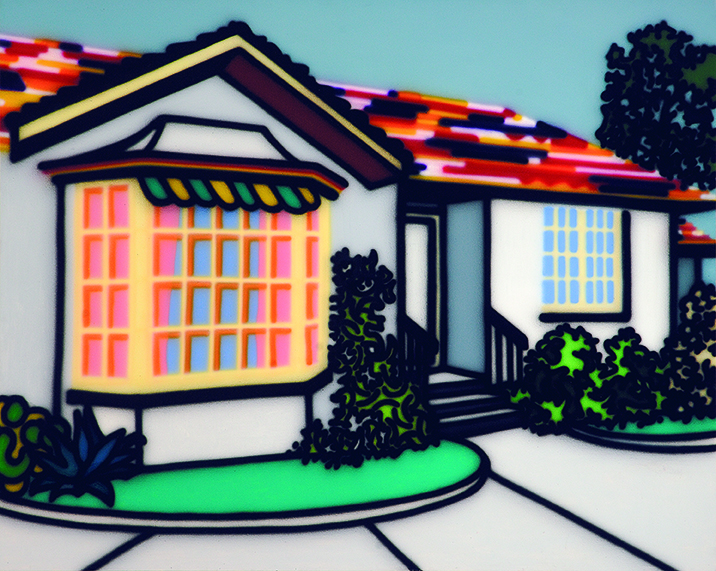
TarraWarra Museum of Art today announced the major group exhibition The City Wakes, The City Sleeps, curated by Dr Victoria Lynn and James Lynch. This exhibition draws from the TarraWarra Museum of Art Collection to present a selection of rarely seen artwork treasures, exploring how artists across different eras have captured the architecture and social dynamics of city life, revealing the distinctive character of our urban experience and built environments.
The exhibition is divided into eight key ‘scenes’: The Modern City, Suburbia, Rhythms, Thresholds, Interior Lives, The Industrial City, Dreams and Play, and features multiple works by artists such as Howard Arkley, Clarice Beckett, Charles Blackman, John Brack, Rosalie Gascoigne, Louise Hearman, Melinda Harper, Dale Hickey, Robert Jacks, Inge King, Joanna Lamb, Sidney Nolan, Jeffrey Smart and Edwin Tanner.
Curator and Director of TarraWarra Museum of Art, Dr Victoria Lynn, says: ‘This exhibition considers the city awakened and at rest. From the joyful paintings of Swimming at St Kilda Beach by Sidney Nolan, in the 1940s, through the depiction of urban sprawl in John Brack’s painting Subdivision, 1954, and Dale Hickey’s de-populated interiors through to Louise Hearman’s eerie dream-like images and Jon Cattapan’s watery painting Mirror, 1991, Australian artists have manifested a variety of atmospheric interpretations of the modern city.’
Curator at TarraWarra Museum of Art, James Lynch, says: ‘Looking at this exhibition, one thing that became evident is just how much distance and time have passed since many of the artworks were first created. The 1950s post-war boom of Naarm/Melbourne was 75 years ago, and the population has gone from just over 1 million to 5.3 million. The city has become more culturally diverse and much larger physically, with new neighbourhoods stretching in every direction. At the same time, our lives have been transformed in the digital age. It is a good opportunity for our visitors to reflect on some of the utopian and dystopian ideas about the growth of cities, and how these compare to their contemporary realities.’