

TarraWarra International 2026: System Release – Artist & Curator Interviews
Information for Students and Teachers
Explore the exhibition through conversations with the curator and artists.
- Dr Emily Cormack – Curator Interview
- Nikau Hindin – Artist Interview
- Alicia Frankovich – Artist Interview
- Francis Carmody – Artist Interview
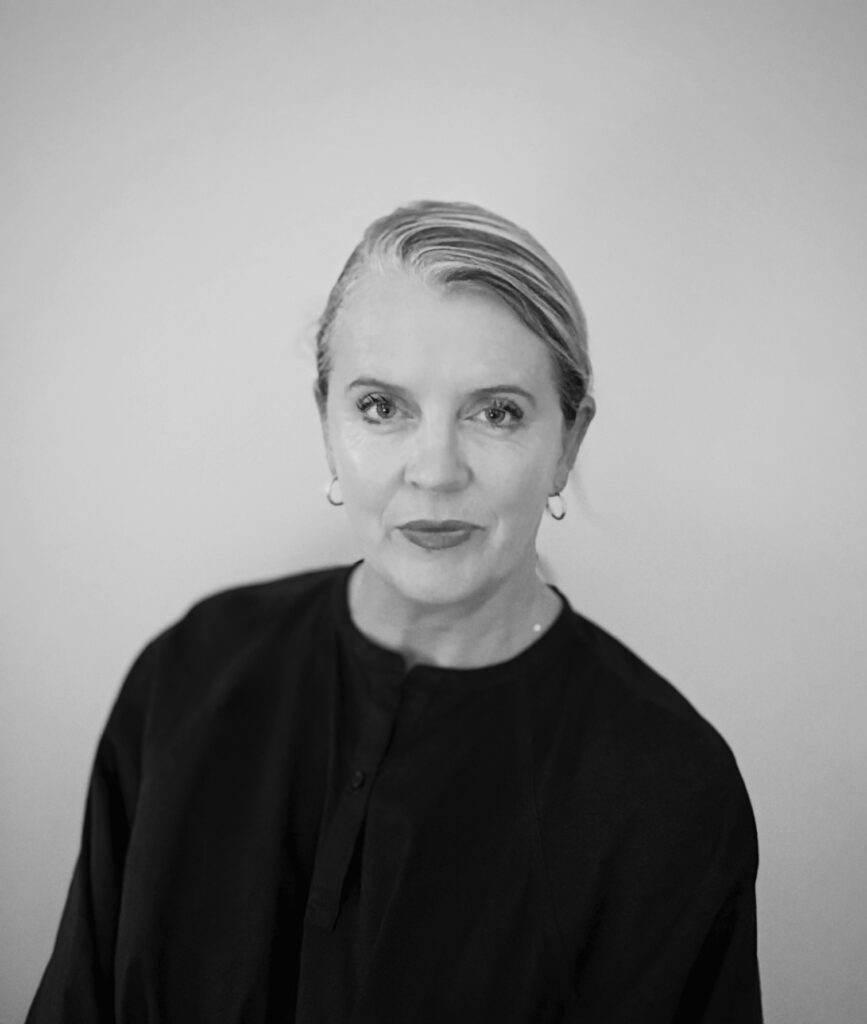
Dr Emily Cormack, Curator
How did you decide upon the themes and title for this exhibition?
This exhibition evolved in response to global socio-political developments over the past five years. These developments revealed the precarity of the global systems that we have traditionally used to create law and order. At the same time, I was becoming aware of a number of artists who were proposing or playing with possible futures in their works, and I began to bring these two streams of thought together.
Key to the change in the socio-political context is the steady erosion of the ‘International rules-based order’ which can be seen as a catastrophic collapse in global law and order. However, I wondered whether this collapse could also be seen as a constructive kind of release where other voices and other systems of order could finally be heard.
Emerging formally at the end of World War II, the International ‘rules-based order’ was intended to ensure global cooperation and prosperity through institutions like the United Nations, the International Monetary Fund, the World Bank, and later, the World Trade Organization. However, increasingly the legitimacy and efficacy of these institutions have been tested, and in many cases, disregarded.
Globally there has been a shift away from a reliance on the ‘International rules-based order’ to maintain stability. Developed for another era, these systems were designed with the assumption that a predominantly Western Eurocentric set of principles might be sufficient to guide and rule culturally diverse nations and populations in perpetuity. In this way, the international ‘rules-based order’ may no longer be fit for purpose because it is not designed to accommodate the multiplicity and plurality of nations.
System Release asks, ‘what can replace this set of laws and guidelines?’ And, perhaps it could be more fruitful to consider this ‘collapse’, as a release? Perhaps as this system of law and order breaks apart, space is cleared for other ways of thinking and other systems of order. This is where the title System Release came from. I wanted to offer this moment of collapse as a kind of freedom, where we might finally be able to hear new systems of knowledge, structures of organization and see different possibilities for future thinking.
Artists have always been a great source of future thinking. The practice of ‘world building’ is core to much artwork, driven by the artists’ tendency to forecast across their conditions – pulling elements from the world around them and combining them with new and visionary ways of thinking. This reshaping of the world allows us to see things differently and imagine our world anew.
What ideas and themes are addressed in this exhibition?
The artworks in the exhibition explore the possibilities that arise when we listen to and draw on indigenous thinking to create policy or to guide governing principles. It also imagines what life forms and their systems might look like after the Anthropocene– when we are merged or coalesce creatively with technology. Other artists’ work envisage what might happen if we could listen more intently to the earth and it’s accumulated knowledge, so that this wisdom could inform our systems of organization.
Navigating a wide arc of socio-political history and politics, the artworks engage with three main bodies of thought that propose possible approaches to new futures, systems or ways of being.
Works by Alicia Frankovich (Aotearoa/New Zealand and Naarm/Melbourne, Australia), Francis Carmody (Naarm/Melbourne, Australia), and Shannon Te Ao (Ngāti Tūwharetoa) are informed by post-humanist philosophies. Post Humanism is a critical theory that challenges human-centered views, exploring the blurred lines between humans, technology, animals, and nature to rethink identity, ethics, and our place in a world where humans aren’t superior or separate. Instead, this philosophy focuses on the interconnectedness between nonhumans, technology, and ecosystems.
Ideas of the “more-than-human” are also present in several of the works. This field of critical enquiry decenters the human, with an emphasis on interdependence, reciprocity and relationality between and across species. Artists such as Megan Cope (Quandamooka, south-east Queensland, Australia), and Nicholas Mangan (Naarm/Melbourne, Australia) engage with the more than human through their enquiries into geological time as a record of our past and an indication of what our future might hold. Similarly, Mexican artist José Dávila presents a major new sculptural assemblage, combining a range of materials with, gravity and chance to evoke the precarious balance between humans and the natural world. The work invites audiences to reflect on their own agency and responsibility in shaping relationships with each other and with the environment.
The exhibition also explores Indigenous Futurism, which reimagines Indigenous futures by foregrounding traditional knowledge, ancestral ways, and Indigenous sovereignty within proposals for possible futures, civic and legal frameworks. This field of enquiry engages ancestral knowledge (Oral history, cosmology, languages) as foundational tools to understand and shape future realities. Māori artists Nikau Hindin (Te Rarawa/Ngāpuhi) and Shannon Te Ao (Ngāti Tūwharetoa) explore these ideas in different ways in their work, as does Daniel Boyd (Kudjala, Ghungalu, Wangerriburra, Wakka Wakka, Gubbi Gubbi, Kuku Yalanji, Yuggera and Bundjalung).
What will the audience see and experience in this exhibition?
The audience will encounter artworks in a wide range of media that offer possible insights, propositions and narratives that might open new ways of being or invite us to understand new knowledge systems. I’m hoping that audiences will be stimulated by the works, and feel curious, uplifted or even unnerved. So that they might feel compelled to learn a little more about each of the works and their stories.
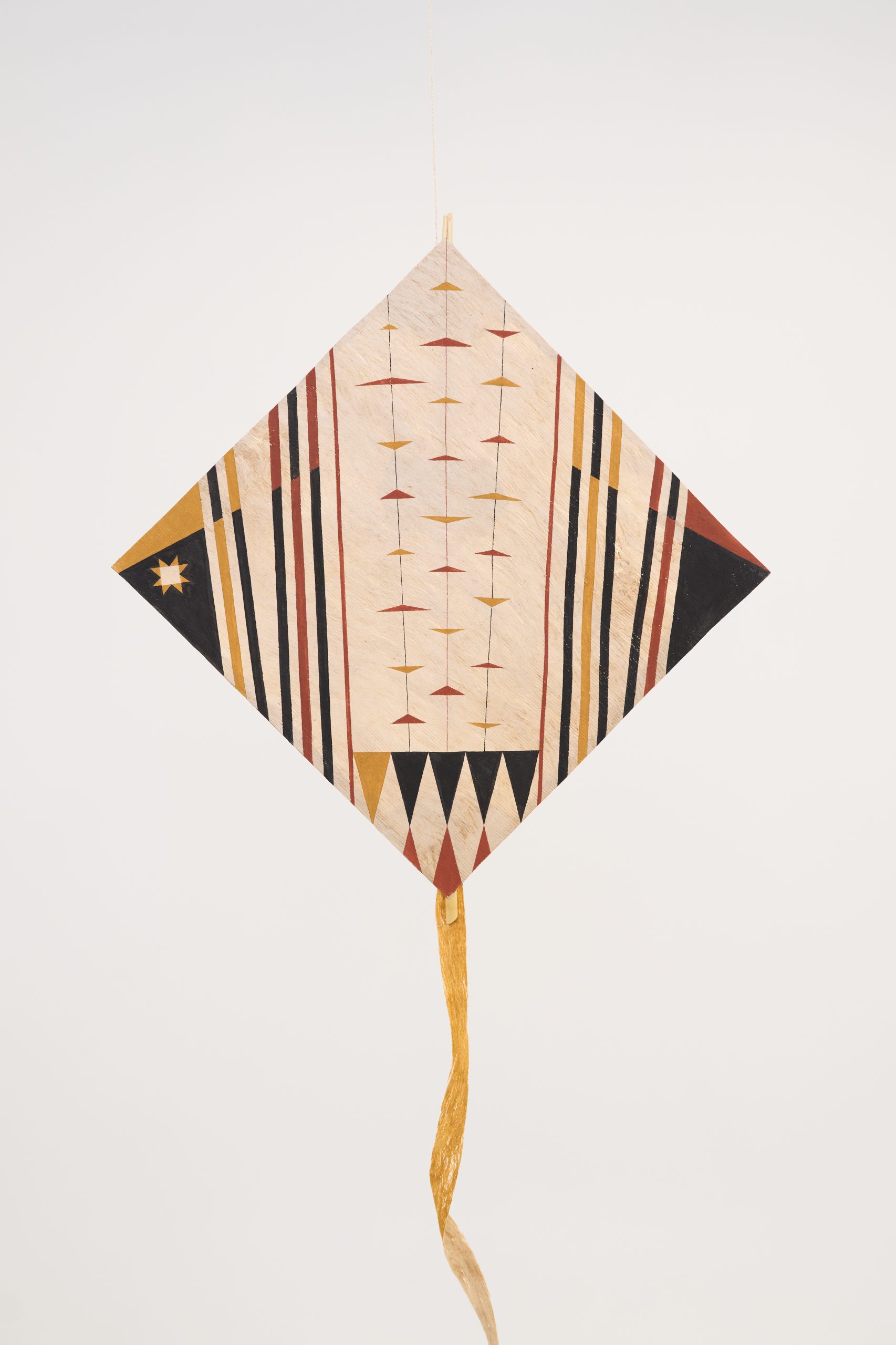
There are large format photographs, two video rooms, three large site-specific installations created in numerous materials. There are 38 manu aute (beaten fiber kites) hanging from the walls. Outside there is a sculpture that acts as a sprinkler that sprays the building with two homeopathic remedies. One is for remembering and the other is for forgetting, reminding us that history runs in cycles, and that as we create new knowledge we have to be careful not to forget old knowledge, but to learn from it and to grow.
How were the artworks selected for this exhibition and what were some of the processes behind these decisions?
Some of the works were commissioned especially for this exhibition in response to conversations that I had with the artists about the exhibition idea. These include Francis Carmody, Alicia Frankovich and Jose Dávila. Others were selected because they had helped inform my conception of the project. Often my curatorial ideas are stimulated by artists’ work and so it is natural that these artists are included in the exhibition as their work builds the ‘story’ of the exhibition. Some artworks are over a decade old such as Dane Mitchell’s and Daniel Boyd’s work, that have been redeveloped for this exhibition. Others, such as Marco Fusinato’s screen prints, are very new and were created in 2025.
As the exhibition’s curator, how did you work with the artists to create this exhibition?
I worked very closely with those artists who were commissioned to make new work, and most of these I have worked with before in different iterations. We would talk first online, then meet in the studio and work out whether the exhibition ideas align with where their practice is heading. We would then keep talking regularly with the artist sending through different ideas which we would then discuss in detail, working out conceptual aspects as well as practical install issues and ideas.
While the artists are developing their work, I begin building an exhibition context or landscape to hold the works. This exhibition ‘landscape’ is developed so that each work sits thoughtfully and sensitively alongside the others, with each work respecting the intention and conceptual orientation of the next. I consider my exhibitions as a kind of ecosystem, where every part is necessary for the whole, and each artwork is part of a network which builds an overall sense or meaning as the visitor moves through the exhibition. I hope that when people encounter this exhibition environment they arrive at a sense of the exhibition’s ‘meaning’, and that the underpinning ideas arise in the viewer in natural, multisensory way, rather than them having to be told or instructed as to what each work means.
How did you make decisions about the way the exhibition is laid out? Did any of the artworks’ materials, size or installation needs influence their placement or inclusion in this exhibition?
I think about curating very spatially, so that the exhibition becomes a kind of sculptural installation in itself. I first group works conceptually and then allow these concepts to fill the space structurally. Some artworks are very large whilst others are discreet. However, to me the conceptual and material connections between each work are more important than their shapes and sizes. As viewers we do not make meaning linearly, we do so proprioceptively, which means using all our sensory receptors and in three dimensions, and so when I develop exhibitions, I work in this way. I feel that curating is about finding and creating contexts that enhance the way an artist’s intention can be transmitted to the viewer and careful spatial planning and establishing sensitive material and conceptual connections between the works are a big part of this process.
Earlier you spoke about the collapse of the international rules-based-order’. What do you mean by this and what are some of the key events that have led to this happening?
Scholars and commentators have suggested that the initial signs of the Rules-based-order’s disintegration were Russia’s Annexation of Crimea (2014), followed by the Invasion of Ukraine (2022), both of which flaunted the UN Charter’s core principles of national sovereignty and territorial integrity. More recently arrest warrants were issued by the International Criminal Court (ICC) for Israeli Prime Minister Benjamin Netanyahu’s role in the Israel-Palestine Conflict and Gaza War (2023–2025), and Vladimir Putin’s role in the invasion of Ukraine. However, both warrants have proven ineffectual in creating change within either of these conflicts.
In addition, the cascading rebellions enacted by Donald Trump within his second term as President suggest a complete rejection of international constraints, with the U.S. acting from an increasingly nationalistic, unilateral perspective. Among other things, these actions have culminated in the United States’ incursion into Venezuela, which signaled a shift toward unrestrained U.S. imperialism, and a complete disavowal of the United States’ commitment to multilateral peace keeping or cooperation. These actions and events are part of what Canadian Prime Minister called “a rupture, not a transition”1 meaning that the systems that have guided global co-operation, human rights and trade for the past 70 years are no longer fit for purpose.
Nikau Hindin, Artist
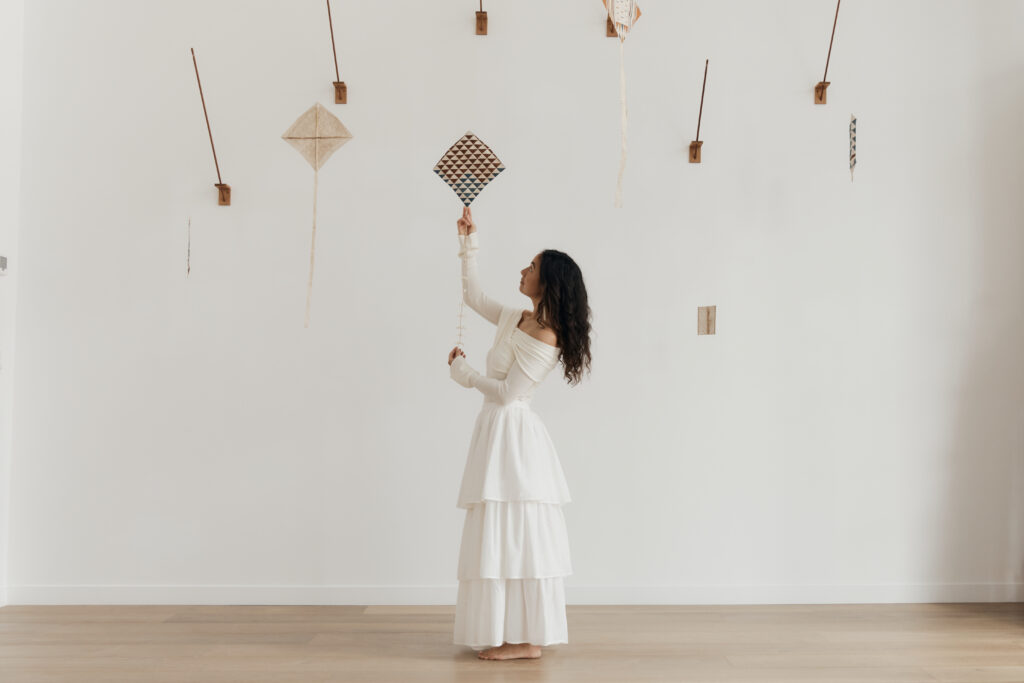
Photo: Holly Burgess
What inspires your art practice / artwork in this exhibition?
I’m inspired by the pūrakau, oral histories of my people and the many layers, sometimes hidden, within these stories. When I was young I was raised to understand the world around me as dynamic, living and embodied by the gods we descend from. We can trace the genealogy of all living things like plants and stars. Understanding the parts that makes a whole and the relationships between beings is really important. We call this Mātauranga Māori, Māori knowledge systems. The main difference between Western science and Mātauranga Māori, is that our longitudinal observations of the environment over centuries have been captured in story form to create cultural significance, teach values, application and to help retention through generations. The stories I learned as a child have grown with me and I have come to understand the hidden secrets within these stories about our universe. I have no doubt there is much more to reveal.
We have an important pūrakau in my iwi Ngāpuhi that recalls the manu aute, bird kite, called Tūhoronuku. Tūhoronuku is our ancestor manu aute from the Hokianga, in the Far North of the North Island. Our big chief Rahiri flew Tūhoronuku from Whiria Pā to define land territories between his two sons Uenuku and Kaharau. It was believed that Manu Aute were an instruments that carried out the will of the Gods. Tūhoronuku ultimately shaped generations that followed and has been a touch point for me in the reinvigoration of the practice of aute.
I am deeply engaged in the reclamation of our customary practices because within these processes, experiences and movements are deeper layers of ancestor wisdom that I am trying to reach. Creating the taonga, precious objects/characters that feature in our pūrakau is like pulling something intangible from memory and manifesting them in this physical world. Recreating taonga in the ways our tūpuna would have, using customary processes and materials like aute, is an invitation to move, breath and see in the ways our ancestors did. There is a lot of joy for me in the dawning of understanding about my ancestors and in turn myself.
How did you decide upon the title and theme for your artwork?
‘Manu Taua: Flight as Fight.’ is the collective title of these manu aute, kites. This title draws on the exhibition they were originally commissioned for ‘O Quilombismo. Of Resisting and Insisting. Of Flight as Fight. Of Other Democratic Egalitarian Political Philosophies’ at the House of World Cultures in Berlin.
Manu means kite/bird and Taua means war party. ‘Flight as fight’ refers to the way quilombismo were created in Brazil, where communities resisted enslavement by escaping to the hills to then establish their own democratic and egalitarian societies. The title of each manu represents the symbolism within the kites. Each manu carries a message of hope for collective action. For example, ‘Kōkiri Forward’, ‘Niwha, Be Resolute’ and ‘Reretahi, Fly in Unitiy’. This collection of kites speak to the many different forms and pathways of resistance.
Please describe and explain your preferred choice of materials, scale and techniques you use in your art practice.
I work with a plant fibre called aute which comes from the paper mulberrry tree (Broussonetia papyrifera). In Aoteaoroa we call both the tree and the beaten cloth – aute. It is cultivated all over Te Moana Nui a Kiwa, the Great Ocean by different island nations to create barkcloth which is known by many names across the Pacific such as hiapo, siapo, ngatu, masi and tapa. When our ancestors sailed to Aotearoa from the islands they brought this precious plant with them and cultivated it here along with other crops like kumara, sweet potato. The practice of beating aute hasn’t been practiced in over 100 years and for the last 13 years I have been focusing on the return of this mātauranga to our people.
To create the bark cloth I cut down aute trees that are about 1-2 years old. I peel the bark from the hard woody core. I then peel the brown outer bark off the inner bast. This sappy, flexible but firm bast is soaked, scraped and then beaten into a soft cloth. I then soak the bast for a few weeks letting the fibres ret and soften and then beat the fibre for a second time. This cloth was originally used by my ancestors for clothing, swaddles, wrapping, adornments and kites. There are many different processes for working the cloth’s texture and shape, so it can be adapted to its many uses.
To adorn this fine paper-like cloth I use kōkōwai, earth pigments and ngārahu, carbon ink. I harvest, gather and make all of these pigments myself. The providence and pūrakau of these soils carries a lot of significance.
The visual language that I draw from comes from Te Whare Pora, The House of Fibre Art Forms. These textile patterns are informed by the grid-like structure of weaving and the patterns that I draw from come from tāniko weaving as well as tukutuku, lattice structures present in our meeting houses.
This is important because these are the female patterns and reflect the way in which our women interpreted their environment. Rectilinear patterns have not been as widely explored within a contemporary context in the same way curvilinear patterns have been, through tā moko, tattooing and whakairo, carving traditions.
Is there something important you can share with students about your own journey to becoming a professional artist?
If you really love making art then do it as much as you can. The most valuable thing you have as a young person is time so practice, practice, practice. I would draw as often as I could as a child and I painted for hours everyday during my high school years. I didn’t know it as at the time but I was developing my stamina and skills as an artist. In art school there isn’t always a lot of time to focus on honing your painting, drawing or making skills. Art school is very important for expanding your mind and learning about lots of different ways of working. However, don’t underestimate the importance of developing skills, patience and focus as a young person in high school.
The other practice that we need to reclaim is what we call tirotiro, observation. Noticing patterns in the environment, looking for things that might be a useful material for art making, looking at different colours and shapes around us, observing a master at work. Observing is a powerful tool for learning. It requires no tools but a curious mind and maybe a notepad and pencil to jot down what you see.
Alicia Frankovich, Artist
Image: Craate Creative
What inspires your art practice / artwork in this exhibition?
I’ve been emersed in a framework for finding new images of the Anthropocene and Capitalocene thinking about agency in relation to tech oligarchies, capitalism, escape, and finding a sense of navigation, proliferation, becoming, queer indeterminacy therein. There has never been one image, it is always moving so fast, no singular idea of fixity can exist here for more than a very fleeting moment. It’s more about trying to grasp something that is relational and something moving that is hard to pin down.
How did you decide upon the title and theme for your artwork?
My project Siphonophore-sphere combines a proliferating analysis of sea life including the bluebottle, which is a Siphonophore. Siphonophores are fascinating, where their makeup challenges the more singular notion of species and identity, as they are made up of a colony of organisms or zooids. They are considered one being, contained in one body, but they’re made of various individuals or polyps who take on different roles in a multi-identitarian way. This example of multiplicity is then merged with other forms of community and becoming, where the bluebottles are seen in and around other living and fictional worlds and spaces and objects, such as 3D prints, tech imaging objects.
The term sphere refers to the spectrum of both image-making and concepts of identities in a state of becoming, referred to and produced in this artwork. There is a sphere or proliferation of forms of life and non-life, from deep sea creatures to plastics to fluttering gestural marks. Inherent in the idea of this work is the spectrum of possibility in thinking about images and embodiments that produce images of our time.
This artwork is another form of image-production, a speculative, concept building mechanism to see life forms that hover and “become-other” in space and time. The James Webb telescope is a groundbreaking telescope, that involves a hexagonal sunshade as part of its mechanism, which blocks out light and heat from surrounding stars and planets such as (the Earth, moon and sun) in order for its lenses to capture observations. I have presented a remake of a fragment of this telescope. It is incomplete and immersed within a myriad of dyed, resin 3D prints. Earth Moon Sun (year) is also the title of Nam Jun Paik’s work that I saw in Aachen last year – a three-part series of sculptures housing video pieces exploring relationalities between Earth, space and beyond – a work so prescient in thinking through the dynamics between nature and culture, technology and planetary entanglements.
Please share some creative methods you use in your art practice.
I have been producing, inventing rhythms and differences in the universe. Through drawings and modelled 3d prints and other forms of metal, including laser cutting and other fabrication methods and processes channel these ideas in the ways that other mediums cannot. These are in conversation with ideas of representation – the idea that they might refer to actual things, but they also push out of these conversations, finding these differences, finding something that they are also not, finding new ways they can’t be defined. In other ways this is also happening in the sculptural work. There is a sense of both yearning, searching, but discovering and moving out of an idea of one sort of matter, into the next. So this is why the siphonophore, multi-identitarian idea is so relevant.
Please describe and explain your preferred choice of materials, scale and techniques you use in your art practice.
I like to move between different materials for reasons of discovery, for reasons that one material might be able to speak to something and where another has to go somewhere else. I also like to work with technologies that come from other parts of industry, from different kinds of technologies. That is why I have collaborated with modelers such as Benjamin Creek who can produce frameworks and objects that I can bring life to within these ideas.
How has participating in the System Release exhibition supported the development of your art practice?
This exhibition has allowed an ambitious work to come together after a solidification process. It has allowed a work to lift up into an expanse, to inhabit a museum with agency.
Is there something important you can share with students about your journey to becoming a professional artist?
Nowadays there are lots of avenues to becoming an artist. It helps often to have another field or discipline which you can then apply to your approach as an artist. It is not enough to work solely on form, you must be immersed in a space where you are investigating concepts and content at the same time as whatever forms might be emerging. How you choose to navigate this balance makes one artist’s work stand out over the next. Finding your approach and how it is unique matters and how it becomes important, building meaning and experience into artworks. Embodied research is knowledge and I this is a space I am deeply immersed in. Art can be discussed, described, but there is a tacitness both in the making and the inexplicability of perceiving and knowing/ unknowing the work. It can’t be replicated by words only danced in and around. This sense of navigating in a kind of sensorial, way gives art it’s power. It is a tool for thinking about change and offering questions, ways of thinking, being and knowing.
Francis Carmody, Artist
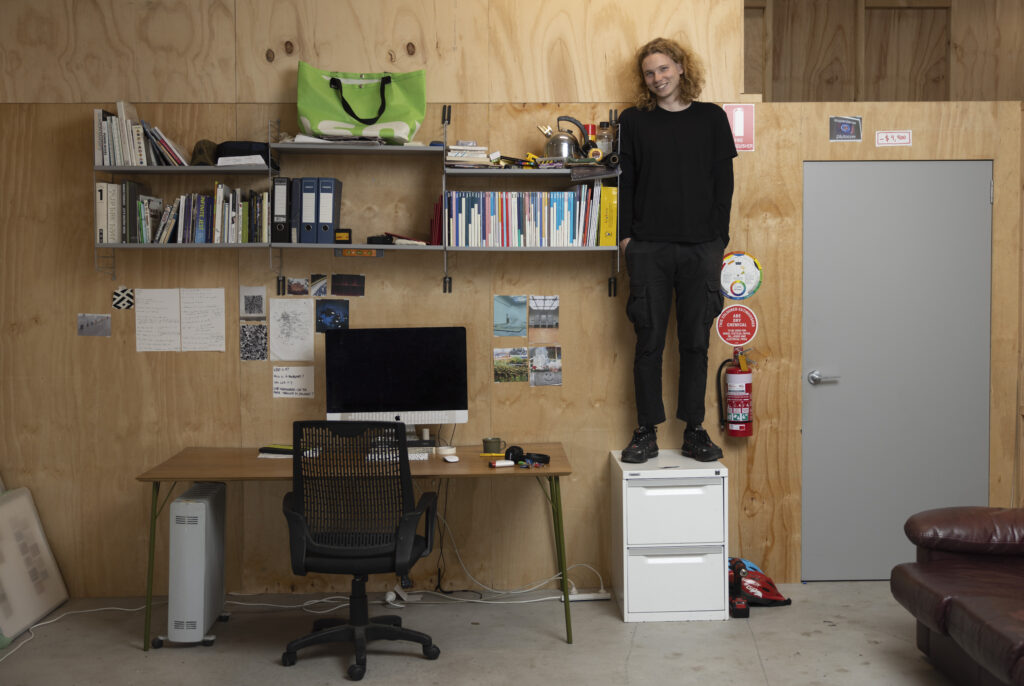
Photo: Tim Herbertson
What inspires your art practice / artwork in this exhibition?
My practice serves as a useful alibi to reach out to people across disciplines and technical capabilities to share stories and complete projects. Through tracing networks and natural structures, I would like to get a glimpse of where we have been and where we are going. I am particularly interested in appetite as a force that shapes behaviour and decision making, something that feels as persistent and unavoidable as gravity. The work in this exhibition draws on this idea, using sculptural forms to trace how desire, hunger, and survival circulate through both natural and industrial systems. Making use of canine forms as a proxy for human appetite.
How did you decide upon the title and theme for your artwork?
I either arrive at the title immediately or it takes a long time to come. I tend to treat titles very simply. The work in System Release is called Canine Trap III because it is a trap with three canines in it.
Please share some creative methods you use in your art practice.
My process is long and collaborative. It begins with a question and a set of constructed logics that become central to each inquiry and project. I move between drawing, digital modelling, material testing, and large-scale fabrication, spending a lot of time experimenting, failing, and adjusting. Conversations with people outside the arts, including engineers, scientists, and fabricators, often shape the direction of the work as much as studio making does. The production of the work is as networked and integrated as the dissemination and presentation of the works themselves.
Please describe and explain your preferred choice of materials, scale, and techniques.
My choice of materials, scale, and techniques is guided by how a work needs to operate rather than how it needs to appear. I work with materials that are built to endure stress, exposure, and time, steel, rope, resin, zinc coatings, salt, because they act, react, and change. These materials carry procedural logics, binding, sealing, oxidising, preserving, rather than symbolic ones, and their behaviour over time is integral to the work.
Scale is important because the questions I am working through are bodily as well as systemic. Working at a life-size or architectural scale prevents the work from functioning as a model or illustration. Instead, it places the viewer in proximity to the structure, where the work must be navigated physically and felt spatially. At this scale, the body becomes part of the system the work describes.
The techniques I use draw from fabrication, manufacturing, and industrial finishing processes, including casting, coating, CNC , 3D Printing and assembly. These methods allow the work to function more like a mechanism or infrastructure than a discrete object. I am interested in processes that continue after installation, oxidation, crystallisation, surface change, where the work remains materially active even when visually still. In this way, material, scale, and technique operate together as a way of thinking through time, pressure, and containment.
How has participating in the System Release exhibition supported the development of your art practice?
System Release allowed me to continue and expand a train of thought developed in earlier works, and to realise it more fully. TarraWarra as an exhibition site enabled me to work at a greater scale, which was essential to the work reaching its full potential.
Working with Emily has also been a joy. She understands the work and exhibition making incredibly well. The placement of Daniel Boyd’s work in the back window also allowed me to release my work in the foreground and at a lower height.
Is there something important you can share with students about your journey to becoming a professional artist?
The title of artist is earned, not given, and I am yet to earn it myself, so I do not think I am able to comment.
*****
Are you a teacher or educator? Join our Learning & Engagement mailing list to get occasional updates from our team about school tours, education resources, personal development sessions and other education updates.
Read more
Curator walkthrough of WILAM BIIK
Curator Stacie Piper walks through WILAM BIIK, a significant First Nations exhibition WILAM BIIK is an exhibition of cultural consciousness and knowledge, of an unsevered connection between First Peoples of South East Australia and their Country, over thousands of generations. Header image: Installation view, WILAM BIIK, TarraWarra Museum f Art, 2021. Works by Djirri Djirri Wurundjeri […]
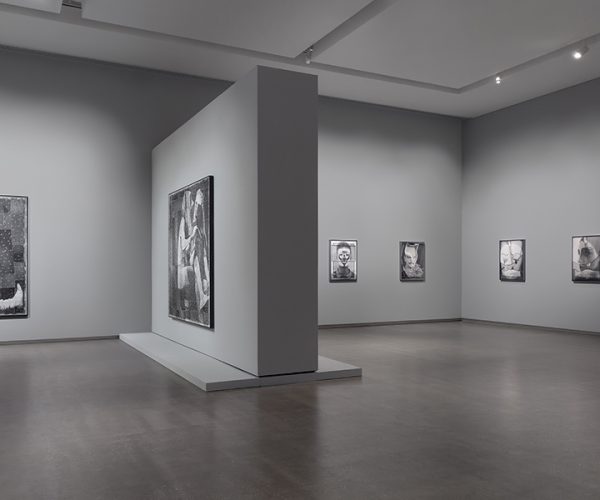
Curatorial conversation: ‘David Noonan: Only when it’s cloudless’
A curatorial conversation Listen to this curatorial conversation recorded live in the gallery between TarraWarra Director, Victoria Lynn, and artist David Noonan. While not a guided tour, this recording is an interesting insight into the solo contemporary exhibition David Noonan: Only when it’s cloudless, curated by Victoria Lynn. David Noonan: Only when it’s cloudless, curated […]
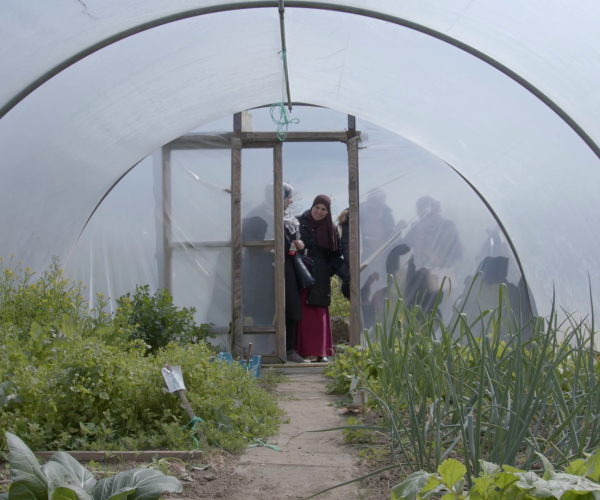
Curatorial conversation: Charles Esche on The Soils Project
A curatorial conversation Director of Van Abbemuseum, the Netherlands, Charles Esche shares interesting insights on how soil is both something that is unique to each of us and also something we share – and why looking into the past to understand the present day is fundamental to creating a better future for all. The Soils […]
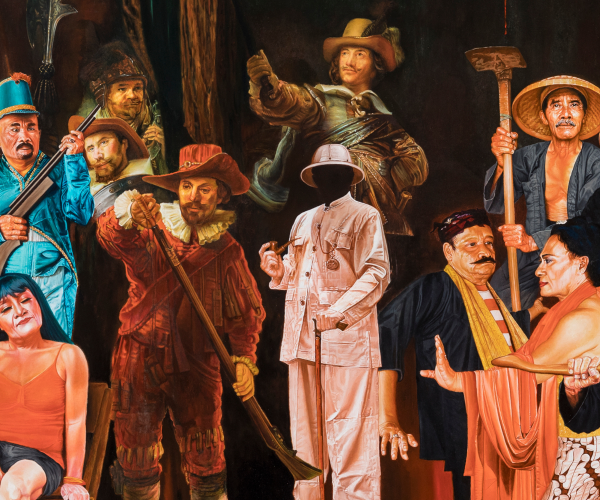
Curatorial conversation: Struggles for Sovereignty on The Soils Project
A curatorial conversation Watch this video with Eliesta Handitya and Gatari Surya Kusuma from activist collective Struggles for Sovereignty based in Yogyakarta, Indonesia. They speak about The Soils Project and in particular the effects of ongoing ecological issues and their work of bringing diverse communities together to address the complexities of deforestation, extraction and justice […]
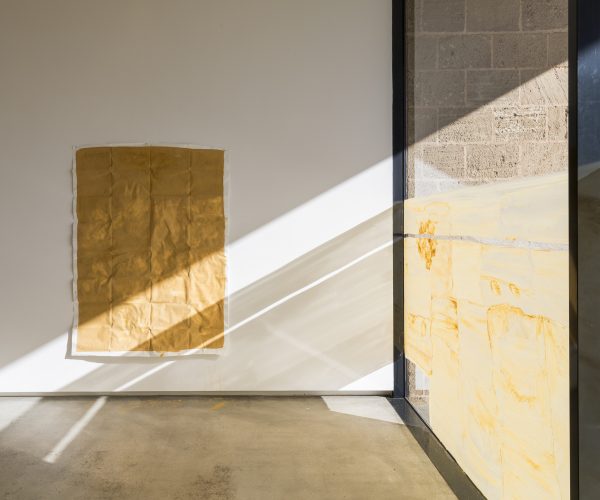
Curatorial conversation: Victoria Lynn on The Soils Project
A curatorial conversation TarraWarra Museum of Art Director, Victoria Lynn speaks about The Soils Project and this particular iteration of an ongoing research-based experimental project developed in collaboration with leading contemporary arts museum the Van Abbemuseum in Eindhoven, the Netherlands and Struggles for Sovereignty, a collective based in Yogyakarta, Indonesia. The Soils Project arises from […]
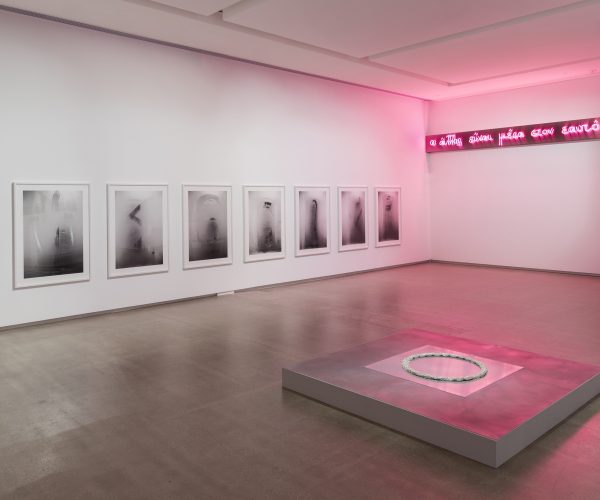
The making of (SC)OOT(ER)ING around Su san Cohn and Eugenia Raskopoulos
Information for Students and Teachers. Learn more about the exhibition (SC)OOT(ER)ING around as the TarraWarra Learning and Engagement team investigate the making of the exhibition with craft artist Su san Cohn, visual artist Eugenia Raskopoulos, and exhibition curator and Museum director, Dr Victoria Lynn. What is the title of this exhibition and how was it decided […]
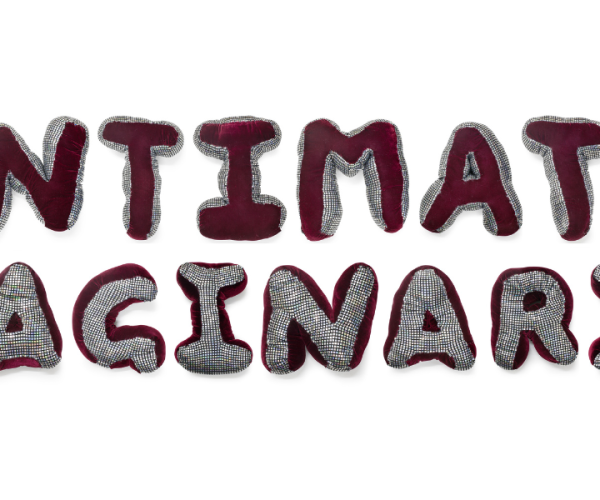
The making of Intimate Imaginaries: Q&A
Information for Students and Teachers. Learn more about the exhibition Intimate Imaginaries as the TarraWarra Learning and Engagement team explore the inspirations, techniques, and personal insights with the artists and curator Anthony Fitzpatrick. Intimate Imaginaries is a landmark exhibition celebrating the innovative practices of 13 artists from Arts Project Australia. Download the PDF to learn more. […]
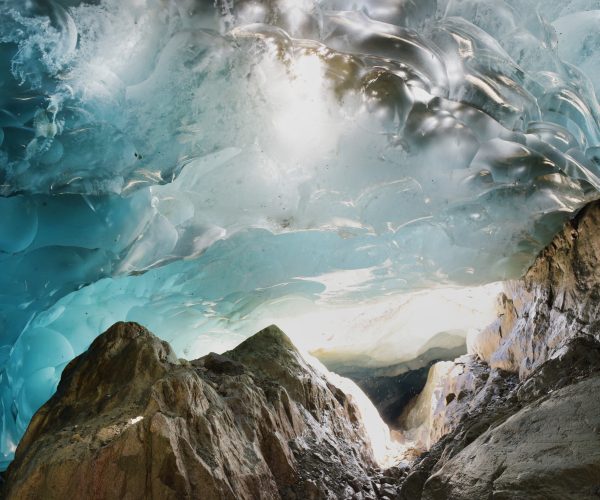
The Soils Project: Diewke van den Heuvel
Diewke van den Heuvel speaks about her work Melting Heart. In this poetic ode, Diewke bears witness to the disappearing glacier. Climate change, a mostly hidden force, becomes visible as Diewke visits the Aletsch area in the Alps. The largest glacier of the Alps, melting rapidly, will vanish in 70 years. You’re invited to […]